
Sustain the lawyer. Sustain the system.
In Conversation with President of the Law Society, Mark Evans

Mental health and wellbeing have become increasingly important conversations within the legal profession. While attitudes have changed significantly in recent years, lawyers continue to face pressures ranging from demanding workloads and financial uncertainty to exposure to trauma and the challenge of maintaining a healthy work life balance.
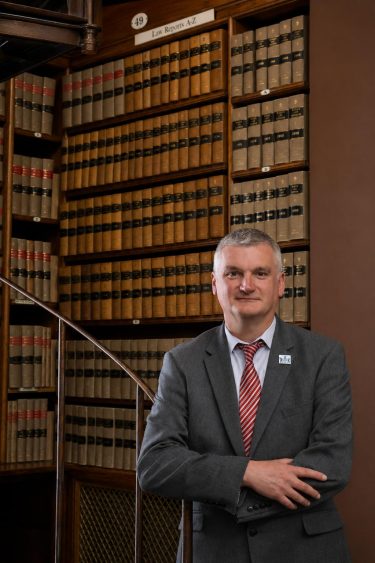
Few people have witnessed those pressures more closely than Mark Evans. As President of the Law Society of England and Wales, and after more than thirty years working in a high street legal aid practice, Mark has seen firsthand the impact that funding pressures, rising demand and shrinking practitioner numbers have had on both lawyers and the communities they serve.
Throughout his career, his firm held legal aid contracts across criminal, family, housing and social welfare law, giving him a unique perspective on life at the sharp end of access to justice. Alongside his work within the profession, he remains passionate about encouraging the next generation of lawyers and regularly speaks with aspiring solicitors about the value of legal aid work. Away from the office, Mark is also a proud two-time world record holder through participation in the Virtual London Marathon in 2020 and the London Marathon 2026, an achievement that reflects his belief in the importance of looking after both physical and mental wellbeing.
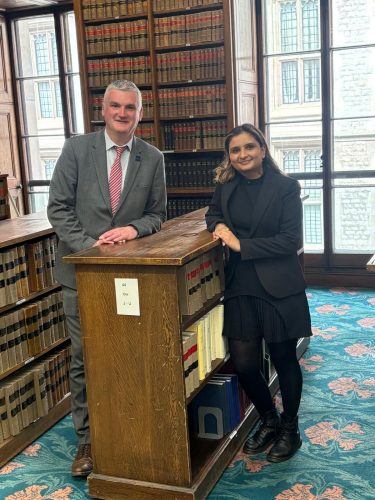
As part of the Young Legal Aid Lawyers Mental Health Pledge campaign, co-chair Priya Pandya spoke to Mark about the realities of legal aid practice, the emotional burden carried by many practitioners and what must change if we are to sustain both the lawyers and the justice system they serve.
During the discussion, Priya asked Mark the following questions:
You’ve made solicitor wellbeing one of your priorities as President. Why did you feel it was important to place mental health so prominently on the Law Society’s agenda?
The world in which lawyers practise has changed dramatically over the last thirty years. When I entered the profession in 1993, there was no internet, no smartphones and no expectation that people would be available every hour of every day. Today, we live in a world that is constantly connected, where emails arrive at all hours and responses are often expected immediately.
That shift has had a huge impact on wellbeing. The boundaries between work and personal life have become increasingly blurred, making it much harder for people to switch off.
Law has always been demanding, but legal aid lawyers face additional pressures. They regularly deal with traumatic situations and vulnerable clients, yet the confidential nature of the work often means they cannot discuss what they are carrying with friends or family in the way many other professionals can. People can end up carrying a great deal on their own.
There is also the impact of social media, public criticism and increasingly challenging interactions within the justice system. All of these things add pressure. That is why I felt it was important for wellbeing to be a priority during my presidency.
The legal profession is far more open about mental health than it was twenty or thirty years ago. In your view, what has changed for the better and where are we still falling short?
The biggest change is that the conversation has started. There is now a much greater recognition that mental health and wellbeing are essential. We understand that if you want to be a good lawyer, you need to look after yourself.
The stigma around stress, anxiety and mental health challenges has reduced considerably. People are far more willing to speak openly about their experiences than they were when I started my career.
Where we still fall short is that we often focus on mental health when somebody reaches crisis point. We need to think much more about prevention. How do we spot the warning signs earlier? How do we support people before problems become overwhelming?
Professional bodies, employers and managers all have a role to play. Support should be available at every stage of a lawyer’s career. At the same time, individuals need to recognise the importance of protecting time for themselves and the people around them.
Looking back, I rarely took a proper summer holiday when my son was growing up because I was focused on practice. With hindsight, I am not sure that was the right approach. We need to recognise that life outside work matters too.
Many young solicitors tell us they are comfortable talking about mental health in principle, but much less comfortable admitting they are struggling themselves. Why do you think that gap still exists?
I think everybody needs someone they can talk to.
For me, I have often found it easier to speak to someone outside my immediate circle than to colleagues or family members. Sometimes it is easier to be honest with somebody who is independent.
The profession has traditionally valued competence and self-reliance. Admitting that you are struggling can feel difficult, particularly early in your career.
My own experiences dealing with family illness, dementia and loss reinforced the importance of talking about difficult experiences rather than carrying them alone. Running became an outlet for me. It gave me space to think and process what was happening. For other people it might be walking, swimming, reading or spending time outdoors.
The important thing is finding a way to switch off and having somebody you can speak to when you need to.
The profession has traditionally celebrated resilience. How do we encourage resilience without creating a culture where people feel they must simply endure unhealthy levels of pressure?
To be honest, I have never particularly liked the word resilience.
Sometimes it suggests that people should simply absorb whatever pressures are placed upon them and carry on regardless. I do not think that is healthy.
We know the profession is demanding. There will always be difficult cases, tight deadlines and periods of pressure. The question is whether people have the support and space to deal with those pressures in a healthy way.
That means making time for yourself, having honest conversations and recognising that it is okay to ask for help. It also means understanding that junior lawyers often feel under pressure to take on everything because they are building experience and trying to establish themselves.
The answer is not telling people to be tougher. It is creating healthier environments in which they can thrive.
The LawCare research has highlighted the impact of long hours, high workloads and client demands on lawyers’ wellbeing. How much of the mental health challenge facing solicitors is cultural, and how much is structural?
It is both.
There remains a culture in parts of the profession where long hours are seen as normal and where people can forget that lawyers are human beings with responsibilities and pressures outside work.
At the same time, there are significant structural problems, particularly in legal aid. Years of underinvestment have left fewer practitioners carrying greater workloads. Financial pressures continue to grow while resources remain stretched.
I have seen excellent legal aid lawyers leave the profession because the financial reality became too difficult. That is a real concern because once those people leave, they take years of knowledge and experience with them.
If we want to retain talented practitioners, there needs to be a long-term commitment to properly funding legal aid and supporting the people working within it.
Young legal aid lawyers often deal daily with trauma, crisis and vulnerability. Do you think we sufficiently recognise the emotional labour involved in that work?
I do not think we do.
Legal aid lawyers are often supporting people at the most difficult moments of their lives. They are dealing with trauma, distress, uncertainty and crisis every day. That inevitably has an impact.
We need more conversations about the emotional burden of the work and better support for those experiencing it. Colleagues need to check in with one another and those conversations need to go beyond simply asking how someone is.
There are excellent organisations providing support, including LawCare, the Solicitors’ Charity, Mind and the Samaritans. The important thing is ensuring people know that support exists and feel comfortable accessing it.
One positive change is that younger generations are often much more comfortable talking about mental health than previous generations were. I think that is helping to break down some of the stigma that used to exist.
You have spoken about legal deserts and the pressures facing communities that struggle to access legal advice. What effect do those wider pressures have on the wellbeing of lawyers working within the system?
The pressures affect everyone.
When people cannot access legal advice, problems often become more serious and more difficult to resolve. Cases become more complex and people become more distressed.
Lawyers see those consequences first hand. They see victims waiting for justice, families struggling to access advice and individuals trying to navigate legal processes on their own.
The pressures lawyers experience are often a reflection of the pressures being experienced by the people they represent.
I have stood in court buildings that were literally crumbling around us and thought about what message that sends about the value placed on justice. Investment in the legal system should be seen in the same way as investment in health or education. It is essential infrastructure.
Mental health conversations often focus on crisis. What does a genuinely healthy and sustainable legal career look like?
For me, it starts long before somebody reaches crisis point.
We need to become better at spotting warning signs, recognising changes in behaviour and creating environments where people feel able to seek support early.
There is no single solution because every workplace is different. However, some principles are universal. People need time away from work. They need boundaries. They need supportive colleagues and managers.
The rise of remote working has brought many benefits, but it has also created new challenges. I remember speaking to a solicitor who worked, ate and relaxed in exactly the same space every day. That cannot be healthy in the long term.
Sometimes relatively small changes can make a significant difference. Being realistic about workloads, taking proper breaks and creating clear boundaries between work and home life all matter.
Finally, if a young legal aid solicitor loves the work but is questioning whether they can sustain the emotional and financial pressures of the job, what would you want them to hear today?
I would want them to remember why they chose this profession in the first place.
Legal aid work makes a real difference to people’s lives. Every day, legal aid lawyers help people through some of the most difficult situations they will ever face. That work matters.
The challenges are real. Financial pressures, emotional pressures and wider problems within the system cannot be ignored. But there is also enormous value in knowing that your work has purpose and impact.
My advice would be not to carry everything alone. Build a support network. Talk to colleagues. Ask for help when you need it. Protect time for yourself and the people who matter to you.
You can have a successful and fulfilling career in legal aid. The profession needs talented and committed lawyers, and the work you do genuinely changes lives.
–
Throughout our conversation, Mark returned to one central point: lawyers cannot be an afterthought in discussions about access to justice. Behind every case, every client and every legal aid contract are people carrying significant professional and personal pressures.
While attitudes towards mental health have undoubtedly improved, there is still more to do. Better support, earlier intervention and long term investment in legal aid all have a role to play.
For those working in legal aid, the message is simple. Looking after your wellbeing is not separate from being a good lawyer. It is part of it.
Want to have a conversation with us? Contact us at ylalinfo@gmail.com – we’d love to hear from you!