
Sustain the lawyer. Sustain the system.
In Conversation with Baroness Hale


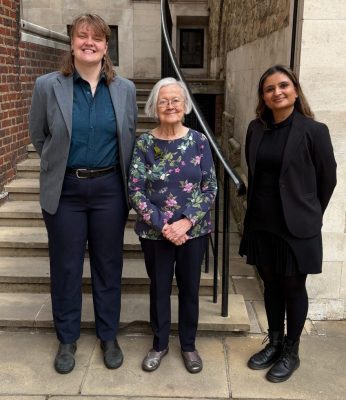


Mental health and well-being have become increasingly important conversations within the legal profession. While attitudes have changed significantly over the past five decades, lawyers continue to face pressures ranging from demanding workloads and emotionally challenging cases to the wider strains created by an overstretched justice system.
Few people have witnessed that evolution more closely than Lady Hale. Over a distinguished career spanning sixty years, she became the first woman appointed to the Law Commission, the first female Lord of Appeal in Ordinary and the first woman to serve as President of the Supreme Court of the United Kingdom. Her work across family law, children’s rights, equality and mental health law has given her a unique perspective on both the legal profession and the people it serves.
As part of the Young Legal Aid Lawyers Mental Health Pledge campaign, co-chair Priya Pandya spoke to Lady Hale about how attitudes towards wellbeing have changed, the emotional demands of legal practice, the importance of resilience, and the wider reforms needed to support both lawyers and the justice system.
During the discussion, Priya asked Baroness Hale the following questions:
When you began your legal career, mental health was rarely discussed openly, either in society or especially in the legal profession. What attitudes towards stress, anxiety, and emotional wellbeing do you remember from those early years?
The most telling answer is that I do not remember much discussion about it at all. Mental health simply was not something that people spoke openly about within the profession.
Partly, that reflected the era. There were very few women in practice, and many aspects of professional life that we would recognise today were simply not discussed. There were certainly difficult personalities and behaviours. Some judges were genuine bullies and behaved in ways that would not be tolerated today. At the time, however, people did not frame those issues in terms of mental health. They simply regarded them as examples of poor behaviour.
I still think it is important to recognise that behaviour can be wrong regardless of whether it causes a mental health condition. Bullying, discrimination and poor treatment should be challenged because they are wrong in themselves, not only because of the consequences they may have for somebody’s wellbeing.
My own involvement with mental health issues came largely through my academic work. I was teaching social workers who were responsible for operating the Mental Health Act and making decisions about whether individuals should be detained and treated in hospital. That exposed me to mental health law at a very practical level. There was some awareness of wellbeing amongst students, and support services existed, but it was not a topic that attracted the level of discussion, understanding or attention that it does today.
Looking back over the six decades you have spent in the law, do you think the profession has genuinely become better at supporting mental wellbeing, or have we simply become better at talking about it?
I think there is certainly greater awareness today. Society generally is much more willing to discuss wellbeing and workplace pressures than it was when I started, and that has undoubtedly filtered into the legal profession.
I often prefer the term wellbeing because people tend to feel more comfortable discussing it than they do mental health. Many people do not want to admit that they have reached the point of experiencing a recognisable or diagnosable mental health condition. Talking about wellbeing feels more accessible and allows people to discuss a broad range of challenges, including discrimination, bullying, workplace culture and the pressures of professional life.
The story you shared about the young barrister whose father died shortly before a major trial illustrates this perfectly. Whether or not it resulted in a diagnosable mental health condition is almost beside the point. Chambers should have recognised that he was not in a position to conduct a serious trial and should have supported him. I was very pleased to hear that the judge recognised the situation and acted with compassion and common sense.
I also believe the judiciary has become more sensitive to these issues than it was when I started. Whether that is because there are more women in the judiciary, because judges receive more training, or because wider society has changed, I cannot say. However, compared with the judiciary I encountered at the beginning of my career, there has definitely been improvement.
Do you think the legal profession traditionally valued resilience and a ‘just get on with it’ mentality, and do you think that culture sometimes came at the expense of acknowledging when people were struggling?
I think there is some truth in that, but it is also important to recognise that advocacy genuinely requires resilience. If you are going to be an advocate, you must be able to perform under pressure, manage nerves and continue functioning despite difficult circumstances.
In fact, some degree of nervousness is healthy. Completely fearless barristers are rarely the best barristers. You need to care about the outcome and understand the responsibility that comes with the role. The challenge is learning how to manage those pressures effectively.
That does not mean poor behaviour should be tolerated. There is a difference between the inevitable stresses of advocacy and the unnecessary pressures that should never form part of professional life. Judges should be authoritative, but they should not be bullies. Opponents should not be bullies either. The profession should not accept unnecessary hostility, intimidation or poor treatment as somehow being part of becoming resilient.
The reality is that advocacy is demanding work. Not everybody will enjoy it or thrive in it, and there is nothing wrong with acknowledging that. However, the challenges people face should come from the nature of the work itself, not from avoidable behaviours or unhealthy professional cultures.
Much of your work has involved children, families, and other vulnerable people. How has that shaped your understanding of the emotional impact that legal work can have on those who practise it?
Family law involves some of the most sensitive and emotionally difficult cases imaginable. Whether you are dealing with allegations of abuse, neglect, family breakdown or disputes concerning children, you cannot be unaware of the emotional impact of the evidence you are reading and hearing.
Family practitioners and judges must develop something very similar to what doctors develop throughout their careers. You need enough empathy to understand the people you are dealing with, the circumstances they are facing and the context of their lives. At the same time, you need sufficient professional distance to provide sound advice, make rational decisions and achieve the best outcome that is realistically possible.
Most people do not come away from family proceedings feeling happy. Even when a legal victory is achieved, it may not feel like a personal victory because of the wider consequences for the individuals and families involved. Family law is inherently stressful because it deals with deeply personal aspects of people’s lives.
For that reason, I think lawyers must constantly strive to maintain a balance between empathy and objectivity. Too much distance can make you lose sight of the human reality of a case, but too much emotional involvement can make it difficult to perform your role effectively.
Do you have a case that has stayed with you throughout your entire career?
There are several cases that have remained with me, particularly those involving allegations of child abuse.
The cases that stay with you are often those where you are confronted with the reality of what a child has experienced. You find yourself reflecting on what that child’s life must have been like and the circumstances they have endured.
I remember cases involving very serious allegations of sexual abuse where the medical evidence, the behavioural indicators and the eventual disclosures painted an extraordinarily troubling picture. Those are the sorts of cases that remain in your memory because they force you to confront the vulnerability of children and the responsibility carried by everyone involved in the justice system.
There are also cases where, as a judge, you have had to make difficult decisions about risk. Social workers are understandably cautious because of the responsibilities they carry, but judges must be prepared to scrutinise their recommendations carefully and, on occasion, take a different view. Sometimes those decisions stay with you because you never know what happened afterwards, and you continue to wonder about the families involved long after the case has concluded.
Many young lawyers spend their working lives hearing stories about trauma, abuse, poverty, and crisis. Do you think the profession sufficiently recognises the emotional labour involved in that work?
I am not sure I am qualified to judge the profession as it exists today, but I do think that people are far more willing to discuss these issues than they were when I started.
That, in itself, is progress. Recognising the emotional impact of legal work is important because lawyers who regularly engage with difficult and traumatic subject matter are inevitably affected by it to some degree. The willingness to acknowledge that reality and discuss it openly is a positive development.
Individuals are often drawn to the legal profession by a strong sense of justice and public service. How can they hold on to that sense of purpose without being overwhelmed by the pressures of work?
When we talk about the pressures of work, we are often talking about different things. There is the sheer quantity of work, which can certainly be overwhelming, and then there is the emotional pressure that comes from dealing with difficult cases and difficult outcomes.
Most people who become lawyers are already accustomed to working hard. The greater challenge is often dealing with cases where you feel strongly that justice is on your side, yet you know that you face an uphill battle in proving it. Those situations can be particularly stressful.
As a lawyer, however, you have to retain a degree of objectivity. You need to be realistic about both the strengths and weaknesses of your case. If you become too emotionally invested, you risk losing perspective and may ultimately do a poorer job for your client.
That is why I return to the balance between empathy and objectivity. You must care enough to understand the people you are representing and the issues they face, but you must also maintain sufficient distance to exercise good judgement. Achieving that balance is difficult, but it is essential.
To what extent do you think the wellbeing challenges facing lawyers over the years are actually symptoms of wider pressures within the justice system itself?
I think they are directly connected. Many of the challenges lawyers face are symptoms of much wider problems within the justice system.
The restrictions on public funding have had a particularly significant impact. In family law, for example, the withdrawal of funding for advice, assistance, preparation and negotiation has meant that many families can no longer access the support they need before matters reach the court. As a result, more disputes escalate and more cases enter the court system unnecessarily.
When those cases do reach court, they often take longer because individuals are representing themselves. Cases can become either unnecessarily lengthy or unrealistically short because litigants in person often struggle to present matters in the most effective way. This creates additional pressures throughout the system and contributes to delays.
The same problems can be seen elsewhere. There are delays in the criminal justice system, delays in the tribunal system and delays in civil proceedings. Some employment cases, for example, can take years to reach a hearing.
All of this creates stress. It creates stress for litigants, who are forced to live with uncertainty for prolonged periods, and it creates stress for the legal professionals who are trying to assist them. The longer proceedings are delayed, the greater the emotional burden becomes for everyone involved.
Many of these difficulties stem from a combination of underinvestment in the justice system and false economies. Restricting access to early legal assistance may save money in one area, but it often creates larger problems elsewhere.
If you had three wishes today to tackle the current state of the justice system, whether in relation to wellbeing, family law, crime or the wider administration of justice, what changes would you make?
My first and most important wish would be for the public to understand the importance of the justice system.
Too often, people think only about the criminal justice system. In reality, there are several justice systems operating alongside one another. Most people are actually more likely to encounter the civil, family or tribunal systems than the criminal courts.
The justice system exists to vindicate rights, enforce responsibilities and resolve disputes peacefully. It is there to protect us all by punishing, compensating for or prohibiting bad behaviour. If the public better understood its importance for them, politicians would be under greater pressure to support and invest in it.
One of my predecessors, Lord Neuberger, observed that there are two things every government must do. One is to defend the country against external threats. The other is to keep the peace at home through laws and a functioning justice system. We seem to have forgotten the importance of both those responsibilities in recent years.
My second wish would be to address the issue of sentence inflation. Throughout my time in the law, prison sentences have become steadily longer, largely as a result of political decisions. However, the resources necessary to support those policies have not kept pace.
As a result, prisons are under significant pressure and the potential benefits of imprisonment are often undermined by a lack of resources. If we are serious about what we want imprisonment to achieve, we must also be serious about investing in the system that supports it.
My third wish would be for a more thoughtful and targeted approach to public funding for legal services, alongside a continued commitment to equality, diversity and inclusion.
I do not believe that access to justice and access to lawyers are exactly the same thing, although access to lawyers can often improve access to justice. There are situations where legal representation is essential, particularly in family proceedings, and we need to ensure that support is available where it is genuinely required.
At the same time, I would like to see greater clarity in public discussions around equality. We should continue striving to provide people with equal opportunities and fair treatment, while recognising the distinction between equality of opportunity and equality of outcome.
If you take one aspect of today’s conversation about mental health and wellbeing and bring it back to the legal profession in the 1970s, what would it be? And conversely, is there anything about the way earlier generations approached work pressure and resilience that young lawyers today can still learn from?
That is a difficult question because the profession was very different when I started.
If I could take one thing back, it would simply be the willingness to have these conversations. The fact that we are openly discussing wellbeing, pressure and mental health is itself an important part of addressing the challenges people face.
As for what younger lawyers might learn from earlier generations, I think preparation remains one of the most effective ways of managing professional pressure. The best defence against anxiety is often to ensure that you know your case thoroughly, have prepared properly and have thought carefully about the realistic outcomes.
If you have done everything you reasonably can, you place yourself in the strongest possible position. That does not eliminate pressure altogether, but it can make it more manageable.
Ultimately, none of us can be strong all of the time. However, being well prepared remains one of the most effective tools available to any lawyer.
If a newly qualified lawyer came to you and said, “I love this work, but I’m not sure I can sustain it emotionally or financially,” what piece of advice would you give them?
The emotional and financial aspects of that question are often closely connected. If your career is not financially sustainable, that will inevitably affect your wellbeing.
My advice would be to think broadly about the many ways legal skills can be used. One of the biggest changes since I was starting out is the sheer number of opportunities available to legally qualified people.
There are roles in regulation, the public sector, government, industry, commerce and countless other fields. There are in-house legal positions that are intellectually challenging and highly rewarding. There are opportunities to use legal knowledge and skills without necessarily following the traditional route of self-employed practice or litigation.
If someone concludes that a particular path is not sustainable for them, that does not make them a failure. Far from it. There are many different ways to build a successful and meaningful legal career.
For those who remain passionate about advocacy and litigation, I would encourage them to persevere. However, they should also recognise that resilience is part of the profession and that they will need to develop ways of managing the pressures that come with it.
The important thing is understanding that there is no single definition of success. A legal qualification opens many doors, and people should not feel trapped into pursuing only one path.
What do you think your younger self, starting out in law at a time when mental health was barely discussed, would make of the conversations we’re having today?
I think she would be quite pleased.
Having conversations like this is an important part of the solution. Simply being able to acknowledge that pressures exist, that people struggle from time to time, and that wellbeing matters represents real progress.
When I was teaching, we recognised that some students faced difficulties and we tried to support them where we could. There were wellbeing issues among academics as well as students, and there were certainly wellbeing challenges amongst practitioners. However, we did not talk about them openly in the way that we do today.
The willingness to discuss these issues, rather than pretending they do not exist, is a positive development. It does not solve every problem, but it is an important step towards creating healthier professional cultures.
One thing I have observed throughout my career is that people often find different ways of coping with professional pressures. The Bar, for example, has always had its fair share of eccentric characters. Some of that is simply personality, but I suspect some of it is also a way of maintaining a degree of distance from the difficult and sometimes distressing work that people undertake.
The legal profession exposes people to challenging situations and difficult decisions. Recognising that reality and talking openly about it is undoubtedly healthier than ignoring it.
In terms of support systems and role models, who would you say has influenced you throughout your career?
I have been fortunate to have many role models throughout different stages of my life and career.
As a young barrister, I was fortunate to work alongside outstanding advocates. On the Northern Circuit, people such as George Carman demonstrated what exceptional advocacy looked like. There were also remarkable women who achieved success at a time when female role models within the profession were relatively rare. Rose Heilbron was undoubtedly one of those figures and served as an inspiration to many women at the Bar.
During my academic career, I was also fortunate to work alongside colleagues who acted as mentors and role models. Universities can be enormously supportive environments, and there were many people from whom I learned a great deal.
If I look beyond the legal profession, however, the person who had perhaps the greatest influence on me was my mother.
She trained as a teacher in the early 1930s, but after she married my father she was required to leave the profession because of the marriage bar that existed at the time. After my father died suddenly when I was thirteen years old, she had to rebuild her life and career.
She returned to teaching, becoming the headteacher of the local primary school. She demonstrated extraordinary courage, resilience, determination and independence during what must have been an incredibly difficult period.
Those qualities had a profound influence on both me and my younger sister. Looking back, I think she provided an example of perseverance and strength that stayed with me throughout my life and career.
Is there anyone you believe should be part of this conversation and whose perspective would be valuable to hear?
I think it is important that a wide range of voices are involved in discussions about wellbeing within the legal profession.
The judiciary has an important role to play because judges have significant influence over professional culture and working practices. Judicial leadership can have a real impact on the wellbeing of lawyers and court users alike.
Professional organisations also have an important contribution to make. They are often well placed to understand the practical realities facing practitioners and can advocate for meaningful improvements across the profession.
I also believe that women’s organisations and representative groups have an important perspective to offer. Wellbeing challenges do not affect everyone in exactly the same way, and issues such as caring responsibilities, maternity, financial pressures and progression within the profession can create additional challenges for some practitioners.
One of the recurring themes throughout my career has been the need to listen carefully to the experiences of different groups within the profession. The more perspectives we hear, the better equipped we are to understand the challenges people face and identify practical ways to address them.
Looking back over sixty years in the law and summing things up, I think it is fair to say that the profession has made progress in its willingness to discuss wellbeing and mental health. Conversations that would have been almost unheard of when I started are now taking place openly across the profession.
However, discussion alone is not enough. Wellbeing cannot be separated from the wider realities of legal practice. Court delays, funding pressures, increasing workloads and systemic challenges all affect the people who work within the justice system.
At the same time, I do not believe we should lose sight of the importance of resilience. Law has always been demanding work and it always will be. The objective is not to remove every challenge from professional life but to ensure that those challenges arise from the work itself rather than from poor behaviour, unhealthy cultures or avoidable systemic problems.
Ultimately, the legal profession requires a balance between empathy and objectivity, resilience and support, ambition and perspective. Those qualities are not in competition with one another. Rather, they are all essential to building a profession that is both effective and sustainable.
If there is one lesson I would leave with younger lawyers, it is that there are many ways to build a successful and fulfilling legal career. Success is not defined by a single path, and no one should feel that changing direction or pursuing a different opportunity represents failure.
The law needs talented, committed people in many different roles. Equally, those people deserve a profession that recognises their contribution, supports their wellbeing and allows them to thrive.
Young Legal Aid Lawyers would like to extend its sincere thanks to Lady Hale for generously giving her time and sharing her reflections as part of the Mental Health Pledge campaign. We are also grateful to Pump Court Chambers for kindly hosting Young Legal Aid Lawyers for this interview and supporting this important conversation. Through the continued support of individuals and organisations across the legal profession, we hope to encourage meaningful discussions around mental health, wellbeing and the future sustainability of legal aid.