
Sustain the lawyer. Sustain the system.
In conversation with Riel Karmy-Jones KC

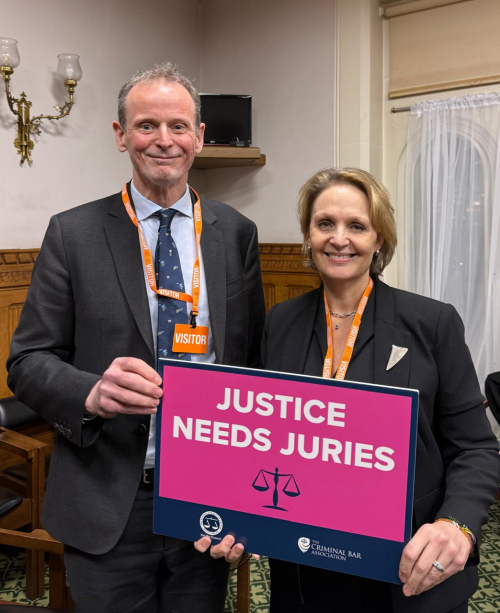

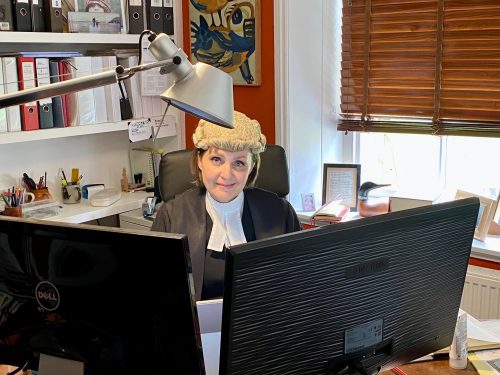

A Conversation with Riel Karmy-Jones KC on Mental Health, Criminal Practice and the Future of the Criminal Bar
Mental health is increasingly part of the conversation within the legal profession, but criminal practitioners continue to work in an environment defined by pressure, uncertainty and exposure to some of the most difficult aspects of human experience. From traumatic evidence and long hours to underfunded courts and increasing workloads, the realities of criminal legal aid practice can take a significant toll on those delivering justice.
Few people understand those realities better than Riel Karmy-Jones KC. A leading criminal silk and Chair of the Criminal Bar Association, Riel has spent her career representing individuals at some of the most challenging moments of their lives while also advocating for the wellbeing of those working across the criminal justice system.
Her route to the Bar was far from conventional. Raised in Canada, Riel began her career in theatre, doing her first degree in Drama and English before moving to the UK to go to Drama School, where she studied Directing. Having worked as a Director for a few years, she changed tack and went back to university to study law. Drawn to the human stories at the heart of criminal practice, she found clear parallels between theatre and advocacy.
“Both are about people,” she says. “Often people at the worst moments of their lives.”
After studying at University College London and completing Bar School, she came to the profession as a mature student rather than following the traditional route to the Bar. It is an experience that continues to shape her outlook today and informs her message to aspiring lawyers: there is no single route into the profession.
Away from court, she laughs when recalling a younger version of herself, complete with brightly coloured hair, Doc Martens and, on one memorable occasion, a midnight swim in Camden Lock that she would not recommend repeating.
As part of the Young Legal Aid Lawyers Mental Health Pledge campaign, co-chair Priya Pandya spoke to Riel about wellbeing at the Criminal Bar, the pressures facing practitioners and what needs to change if the profession is to remain sustainable.
Mental health is being discussed more openly within the profession than it was a decade ago. Have you noticed a real shift in attitudes within criminal and legal aid practice?
Yes, absolutely.
People are much more willing to talk about their experiences than they were ten or fifteen years ago. There was a time when issues such as depression, anxiety or postnatal depression were rarely discussed openly. There was often a sense of embarrassment attached to admitting that you were struggling.
That has changed significantly. People are more candid about their experiences and more willing to recognise when colleagues may need support.
There is also a growing understanding that wellbeing is not simply an individual responsibility. Chambers, professional organisations and colleagues all have a role to play in creating healthier working environments.
The Criminal Bar Association actively promotes wellbeing initiatives and there is far greater awareness than there once was. Talks, conferences and wellbeing programmes have all helped move the conversation forward.
That said, criminal practice remains a high pressure and fast paced environment. We have made progress, but there is still much more work to do, particularly in supporting junior practitioners.
For people outside legal aid, what do you think is most misunderstood about the realities of criminal practice?
Being a criminal barrister is not a 9 to 5 job, it is a vocation, and we spend many evenings, and weekends working.
There remains a perception that criminal barristers earn huge sums of money, but that is simply not the reality for many people working those long hours on legal aid rates. The fees are far lower than most members of the public realise.
People also underestimate the amount of work involved. What happens in court is only a small part of the job. There are countless hours spent preparing cases, reviewing evidence, drafting submissions and meeting clients. It is rare for us not to be working before court sits, and over the lunch break.
I also think there is a misunderstanding about the role of advocates. Defence barristers are not the same as their clients, just as prosecutors are not personally aligned with complainants or witnesses. Our role is to represent our clients, prosecuting and defending, to give them a voice, without fear or favour and ensure the justice system functions fairly.
Too often, the advocate becomes associated with the position they are presenting. That misunderstands what the role actually involves.
Legal aid practitioners routinely engage with violence, abuse, loss and trauma. Do we adequately acknowledge the emotional impact of this work?
No, I do not think we do.
People rightly recognise the emotional impact criminal proceedings have on complainants, victims and defendants. What is often overlooked is the impact on those working within the system.
We spend our careers listening to traumatic evidence, dealing with people in crisis and witnessing some of the most difficult aspects of human behaviour. We absorb a great deal of that emotion.
Barristers are human beings. We feel what victims are going through. We feel what defendants are going through. We carry those experiences home with us and they inevitably affect our families and personal lives as well.
There has traditionally been a belief that professionalism requires us to hide our emotions. We put on the robe, maintain a professional front and carry on. The difficulty is that those emotions do not simply disappear when the working day ends.
We do not take off the robe and leave the emotions hanging from it.
Thankfully, there is now greater recognition of the need to talk about difficult experiences rather than internalise them.
Do you think there has historically been a culture within legal aid practice of simply “getting on with it”?
Yes, very much so.
The culture was often one of putting your head down, preparing the case, doing the work and carrying on regardless.
People neglected their own wellbeing because they believed that we had to be “tough”, and it was simply part of the job.
The consequences of that approach are becoming increasingly clear. We have lost many talented barristers from criminal practice over the years. People often come to the Criminal Bar with a strong sense of purpose and idealism. They want to help people and make a difference.
However, after five or six years many begin to question whether the personal and financial sacrifices are sustainable. They start families, priorities change and they look at other areas of practice that offer a different balance.
It is difficult to blame them. People have every right to put their wellbeing, health and family first.
The problem is that when experienced practitioners leave, they are not always replaced. The burden falls on those who remain and the cycle continues.
How serious is the mental health challenge across legal aid professions?
The fact that people continue to leave tells us how serious it is.
This is not simply an issue for barristers. Judges, Court staff, solicitors and everyone working within the criminal justice system are affected by the same pressures.
We have seen a gradual deterioration in infrastructure, staffing and support. Cases are increasingly complex and workloads continue to grow.
There is also the uncertainty that comes with the work. Practitioners spend significant time preparing cases only for hearings to be adjourned or delayed. The work still has to be done, but the uncertainty creates additional stress.
At the same time, I would not want to paint an entirely negative picture. Criminal practice remains fascinating, rewarding and worthwhile. There are still many reasons to join the profession and many reasons people stay. It is a huge privilege to do this job.
We often discuss access to justice. Do we sufficiently discuss the wellbeing of those delivering that justice?
Not enough.
The conversation is certainly more open than it once was, but cultural change takes time.
When I entered the profession, things were very different. Women were not permitted to wear trousers in court. There were still bars where we were not allowed to order drinks. And there were still parts of the legal world where women faced obvious barriers. The profession has changed enormously since then.
Yet there are still people who do not fully recognise the pressures others may be experiencing.
One challenge is that some of the informal support structures that existed in the past are disappearing. Robing rooms are not used in the same way. Chambers are often quieter than they once were. There are fewer opportunities for those informal conversations that help people process difficult experiences.
That means we need to make a conscious effort to look after one another and to treat our colleagues with courtesy and respect.
How do the pressures differ between junior and senior practitioners?
The experience can be very different.
By the time someone reaches senior junior level or takes silk, they have usually developed relationships within the profession. They know the judges, understand the court environment and have enough experience to push back, and know how they personally can cope with difficult days.
Junior barristers face much more uncertainty.
They are regularly placed in unfamiliar situations, often dealing with judges and opponents they have never encountered before. That uncertainty naturally creates anxiety.
There is also a difference in workload. Junior practitioners may be dealing with less serious cases, but they are handling far greater volumes of work, with a level of additional administration required that we did not have. It can feel relentless.
Many describe it as a hamster wheel of preparation, hearings, emails, what’s apps, and more preparation.
As careers progress, practitioners often deal with fewer cases, but those cases become more serious and complex.
If you could introduce three changes tomorrow to improve mental health in criminal legal aid, what would they be?
First, I would improve court conditions.
Many court buildings are simply not fit for purpose. Working environments matter. Clean facilities, decent working spaces and access to basic amenities make a difference.
Second, I would encourage a less combative culture.. Advocacy is necessarily adversarial, but that should not prevent colleagues from treating one another with respect. We should be able to have robust disagreements in court and still have friendly conversation afterwards.
Third, I would ensure practitioners had protected preparation time built into their working lives.
Too much preparation currently takes place during evenings and weekends. Weekends should not simply become extensions of the working week. If lawyers had dedicated time for preparation, and dedicated time for themselves and their families, they would be under less pressure and able to do their jobs more effectively.
Sometimes small changes can make a surprisingly large difference.
Finally, what message would you give to young lawyers committed to legal aid but worried about burnout or sustainability?
Be true to yourself.
Do not feel you have to fit a particular mould or become a particular type of person in order to succeed. One of the strengths of the profession is that people bring different experiences, backgrounds and perspectives to their work.
There is no single route into criminal practice and no single definition of what a successful barrister looks like.
Know what you don’t know. None of us know everything.
Work hard, believe in yourself and try not to take every criticism personally. Sometimes judges are testing an argument rather than criticising you. Sometimes people are under pressure themselves. None of us gets everything right all of the time.
Most importantly, remember why you came into the profession in the first place. Keep the ladder down to allow others to follow in your steps.
Criminal practice is challenging, but it is also a privilege. We have the opportunity to help people at some of the most difficult moments of their lives and to play a role in the administration of justice.
That remains worth fighting for.
What is the Criminal Bar Association doing to support wellbeing?
Wellbeing remains a key priority for the Criminal Bar Association.
The CBA regularly promotes wellbeing resources and mental health initiatives to members. Weekly communications often include wellbeing messages and signposting to available support.
The Association has also engaged with kindness initiatives, wellbeing events and discussions with the Senior Judiciary, Heads of Chambers, and the Bar Council about the pressures facing practitioners. Through its work with pupils and the Young Bar, it continues to focus on the experiences of those at the beginning of their careers.
Most importantly, when concerns are raised by members, they are taken seriously.
Ultimately, the best thing the CBA can do is continue working to improve the conditions in which criminal practitioners operate. Supporting wellbeing means supporting the people who keep the criminal justice system running every day.
Throughout our conversation, one message came through clearly: criminal practitioners are remarkably committed to the work they do, but commitment alone cannot sustain a profession indefinitely. Better support, better working conditions and a culture that encourages people to look after themselves are all essential if the Criminal Bar is to thrive in the years ahead.
Looking after wellbeing is not a distraction from the job. It is part of doing the job well.