
Young Legal Aid Lawyers Celebrates Pride Month: Pride, Protest and Queer Liberation
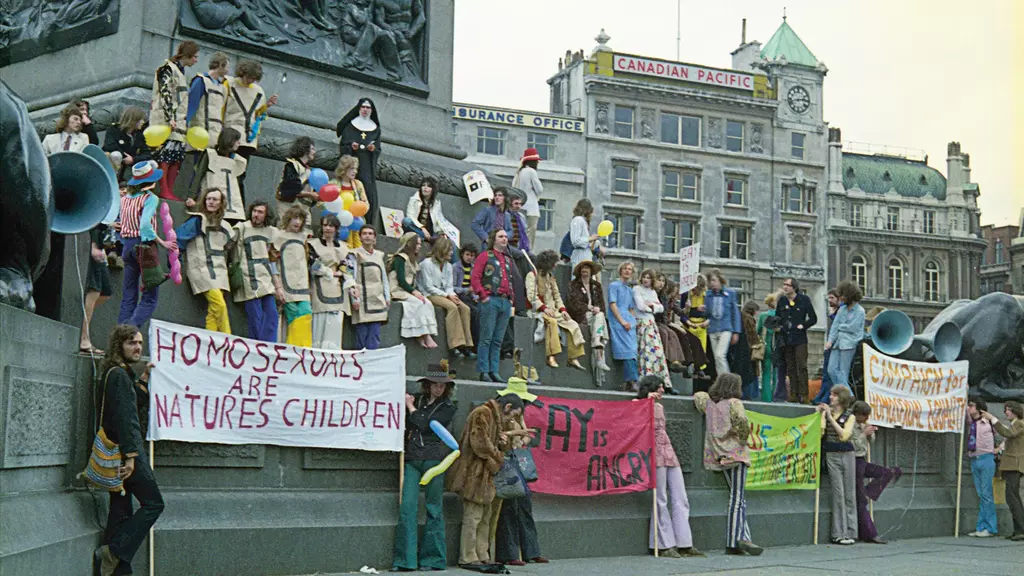
This Pride Month, Young Legal Aid Lawyers wanted to celebrate the story of the first UK Pride march (pictured).
During LGBT+ History Month, we published an article exploring the history of LGBT+ rights in this country. Those rights were hard. But the courts were only part of the story. Protest was vital.
Recent governments have introduced laws that have significantly restricted the right to protest. Legal aid lawyers have been at the forefront of defending those prosecuted under public order legislation and challenging decisions such as the proscription of Palestine Action as a terrorist organisation.
By telling the story of the first UK Pride march, YLAL wants to highlight the enduring importance of the right to protest and celebrate those who risked their liberty in the fight for queer liberation.
The First London Pride
Britain’s first pride protest took place in London on 1 July 1972. The march was inspired by the Stonewall Uprising (28 June 1969). The Stonewall Uprising took place in New York. A week of protest was sparked by a police raid of the Stonewall Inn, a queer venue where patrons faced constant harassment and brutality.
On 1 July 1972, an estimated 2,000 people took to the streets for a carnival parade of protest. They walked from Trafalgar Square through central London to Hyde Park.
The Gay Liberation Front, founded after the Stonewall Riots, organised the march after a series of events and protests preceding the Pride March. The GLF wasn’t about changing the law, it was about changing society. Their slogans were powerful and relevant to this day:
Gay is Good
All Power to Oppressed People
Come Out
Gay is Proud
We are Humansexuals
In the 1970s the GLF organised “gay days.” They were held in parks with games, spin the bottle, kiss-ins and sing-a-longs to the first gay folk classics.
The first UK Pride March was co-organised by the Campaign for Homosexual Equality (CHE). The CHE was the largest and longest running LGBT+ rights organisation at the time.
Where the GLF focused on societal change and radical confrontation of the status quo, the CHE focused on reforming the established political system. They were at the forefront of change of employment rights and lowering the age of consent.
The First Pride march culminated in the “Gay Day” picnic in Hyde Park.
The march was met with a heavy police presence. There was jeering and booing from the wider public. The march continued, the protesters persisted.
The Legal Position
In 1972 the legal reality for Queer people was deeply restrictive, unequal and only partially decriminalised. The Sexual Offences Act 1967 was passed five years earlier but this only decriminalised same-sex acts in private. The definition of private was strict and these acts were illegal if a third person was present in the house. Police arrests of queer people increased following the 1967 act. The police used offences such as gross indecency, solicitation and importuning to persecute queer people. It was illegal to serve in the military as queer person until 2000. There were no anti-discrimination protections or legal protection in health care, housing or the work place.
Legal Aid
The first UK Pride march reminds us that progress has never been inevitable. Every right enjoyed today was won by ordinary people prepared to challenge injustice, often at great personal risk. Those who marched in 1972 did so knowing they would face hostility, discrimination or even criminal sanction. Their courage helped transform both public attitudes and the law.
For legal aid lawyers, this history carries a particular significance. Protest and the law have always been intertwined. The right to assemble, to speak freely and to challenge the actions of the state are fundamental democratic rights. They mean little, however, if people cannot access independent legal representation when those rights are threatened.
More than fifty years after the first Pride march, its legacy endures. Pride remains a celebration of hard won rights, of those queer people to who we owe so much a reminder that equality is not simply granted by Parliament or the courts. It is won through collective action, protected by the law and sustained by those willing to stand up for the rights of others.
Trans Rights
While much has changed since 1972, Pride remains a protest because equality has not yet been fully realised. Trans people continue to face significant legal, political and social challenges.
Public debate around trans rights has become increasingly polarised, and many trans people report experiencing discrimination, harassment and barriers to accessing healthcare, employment and public life.
The struggle for equality did not end in 1972, nor with the legal victories that followed. Each generation inherits the responsibility to defend the rights that have been won and to continue the fight for those that have not.
A Personal Note
As I write this article, I feel grateful. I am an openly and proudly lesbain Co-Chair of Young Legal Aid Lawyers. I am a trainee legal aid lawyer. Next year I will marry my wonderful fiancee. I can only hold these positions and marry the person I love because of generations of queer people before me who refused to accept injustice.
They challenged the law, changed society and fought for a future they might never see themselves.
This Pride Month, I want to say thank you to everyone who came before us. Thank you for your courage, your resilience and your refusal to give up. Because of you, I have the privilege of living openly, loving freely and building a future with the woman I love.
Happy Pride Month!
Louisa Reddin
Co-Chair
Young Legal Aid Lawyers
ylalinfo@gmail.com
@YLALawyers